How often you should really service your aircon in Singapore's climate
By Sam Lee · Updated 2026-07-04
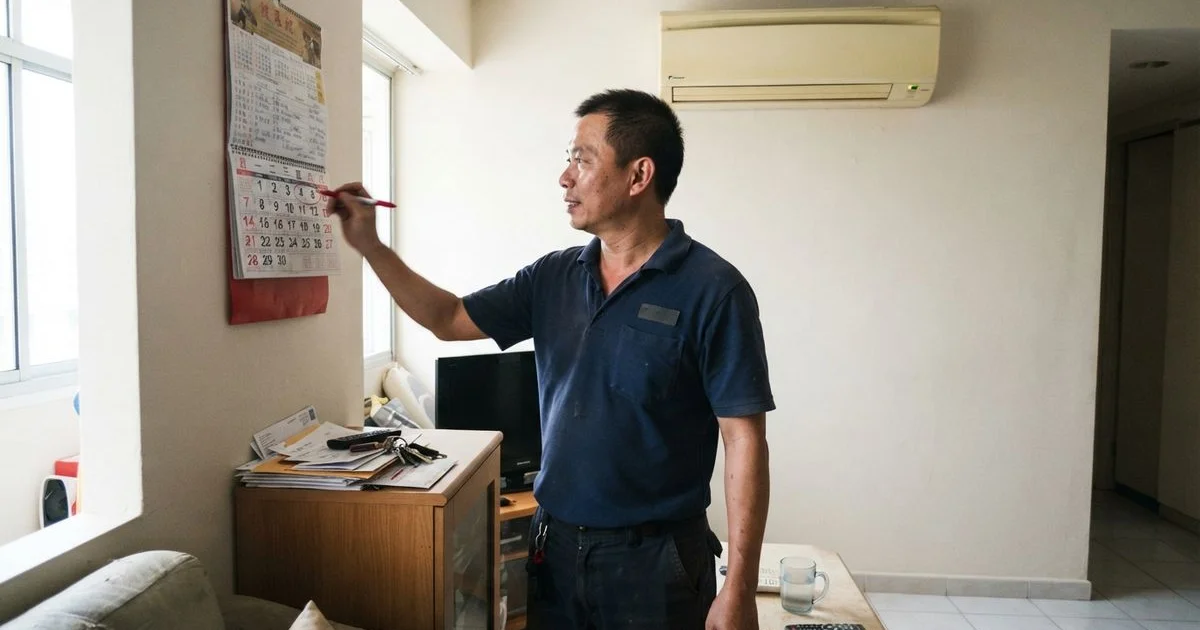
There’s no single correct answer to how often an aircon needs servicing, it depends on how hard the unit works and the environment it’s working in. Singapore’s heat and humidity push most homes toward the higher end of the usual range.
Why usage pattern matters more than a fixed calendar date
A unit that runs a few hours a week collects far less dust and moisture buildup than one running most of the day, every day. Servicing frequency should follow how the unit is actually used, not a flat annual date picked out of habit.
| Usage pattern | Suggested servicing frequency |
|---|---|
| Occasional, a few hours a week | One to two visits a year |
| Daily use, several hours a day | Three to four visits a year |
| Near-constant, almost 24/7 (server room, infant’s room) | Four or more visits a year |
Why Singapore’s climate pushes the number up
High humidity means more moisture inside the unit between uses, which speeds up mould and bacteria buildup on the coil compared to a drier climate. Heavier daily aircon use across most of the year, rather than a seasonal on-off pattern, also means more total running hours to account for. Together, this is why most contractors here recommend closer to three or four visits a year for a daily-use unit rather than the once-a-year schedule that might suit a milder climate.
Signs your current schedule isn’t often enough
Weaker airflow than you remember, a musty smell when the unit starts, or a noticeably higher power bill without a clear reason are all signs the gap between services may be too long. None of these need to wait for the next scheduled visit, book sooner if you notice them.
Matching different units to different schedules
In a home with several units, it’s reasonable to service them on different schedules rather than treating every unit the same. A guest room unit used a few weekends a year doesn’t need the same attention as the living room unit running every evening. Matching frequency to actual use avoids paying for visits a lightly used unit doesn’t need, while making sure a hard-working unit isn’t neglected.
What happens if you go longer between visits than recommended
Stretching the gap between services doesn’t cause an immediate failure, but the effects build up quietly. Airflow drops gradually enough that it’s easy not to notice until it’s compared against a freshly serviced unit. Power consumption creeps up as the system works harder to reach the same temperature. And small issues, a slightly slow drain, an early sign of wear, go unnoticed until they’ve turned into a bigger repair. None of this is dramatic on its own, which is exactly why it’s easy to let servicing slip without realising the cost until later.
Adjusting the schedule over time
A unit’s ideal frequency isn’t fixed forever. A newly installed unit may need less frequent attention in its first year, while an older unit, five years or more into daily use, often benefits from more frequent visits as components naturally wear. Reassess your schedule roughly once a year, especially after any change in how a room is used, a home office set up, a new baby’s room, rather than sticking to whatever frequency you started with indefinitely.
A simple way to track it
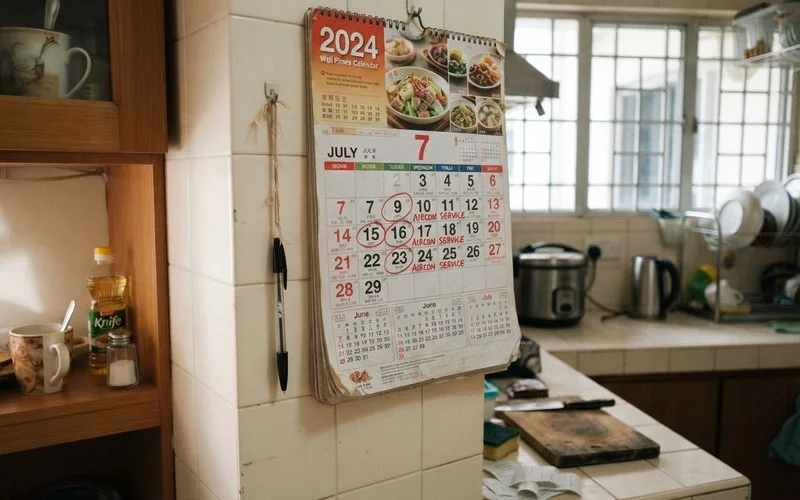
A shared household calendar or a recurring reminder is enough to keep most homes on schedule without needing anything more formal. Note the date of each visit and roughly what was found, even briefly, so you can spot a pattern over time, a unit that keeps needing the drain cleared, for instance, might need a closer look at why rather than just clearing it again each visit.
Setting a schedule that actually sticks
Whatever frequency fits your household, the value comes from keeping to it consistently rather than servicing reactively only once something feels wrong. A maintenance contract can help with this by locking in a schedule in advance, though it’s not the only way to stay consistent.
For contractors who can help set the right schedule for your household, see our aircon servicing and maintenance hub, our methodology page, or the homepage for the full directory.
FAQ
- Is once a year enough for aircon servicing in Singapore?
- For a unit used only occasionally, once or twice a year can be enough. For a unit running daily, most contractors recommend three to four visits a year given Singapore's heat and humidity.
- Does a unit that runs almost 24/7 need more frequent servicing?
- Yes. A unit running near-constantly, such as in a server room or a room used by an infant overnight, works harder and collects dust and moisture faster, and typically needs more frequent attention than a standard daily-use unit.
- What happens if I skip servicing for a year or more?
- Performance usually drops gradually, weaker cooling, higher power bills, and a greater risk of a bigger repair down the line, since small issues that would have been caught early keep building instead.
- Should every unit in a multi-unit home be serviced on the same schedule?
- Not necessarily. A rarely used guest room unit and a daily-use living room unit can reasonably sit on different schedules, matched to how much work each one is actually doing.