Aircon servicing responsibilities for HDB and condo tenants and landlords
By Sam Lee · Updated 2026-06-05
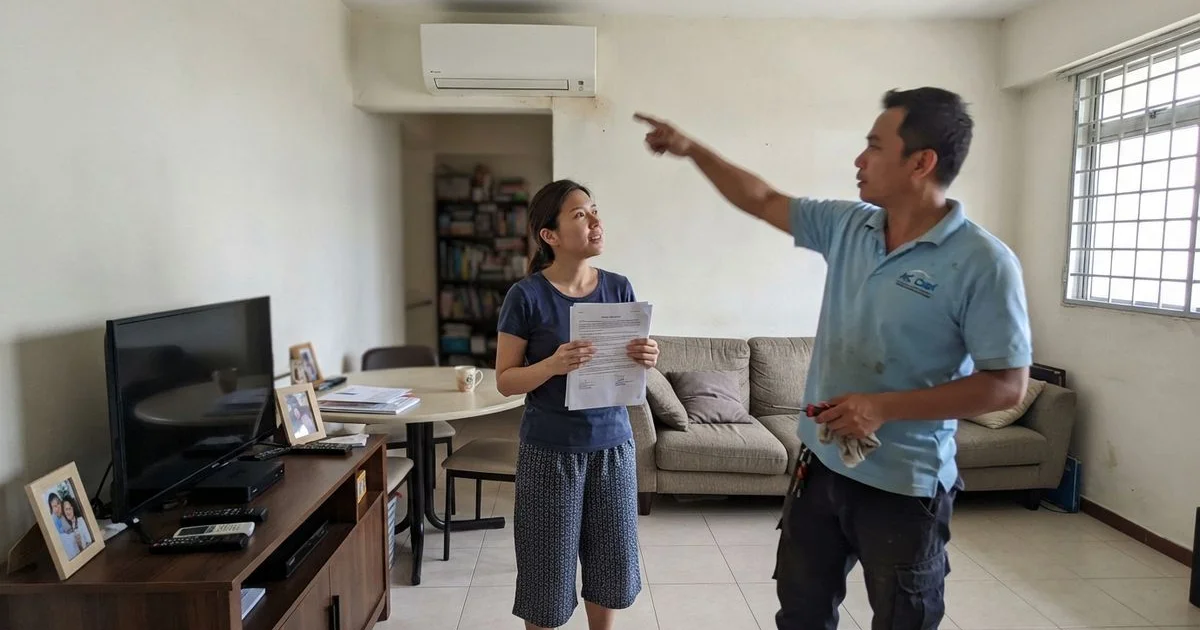
Aircon servicing disputes between tenants and landlords are common enough that most Singapore tenancy agreements now spell out who does what. If yours doesn’t, or you’re not sure what’s standard, here’s how the responsibility split usually works.
The general split
The typical pattern in Singapore rentals is straightforward in principle: the tenant handles routine, scheduled servicing during the lease, while the landlord is responsible for repairs and replacement when a unit fails from normal age or wear rather than misuse. Most tenancy agreements specify a minimum servicing frequency, often quarterly, as a tenant obligation.
Where it gets less clear is the middle ground: a unit that’s cooling poorly because it hasn’t been serviced on schedule versus one that’s simply reached the end of its working life. This is exactly why the servicing clause in your lease matters more than general assumptions.
| Situation | Usually whose responsibility |
|---|---|
| Routine servicing on the agreed schedule | Tenant |
| Repair from normal wear or an ageing part | Landlord |
| Repair from tenant misuse or neglect | Tenant |
| Full unit replacement, unit beyond repair | Landlord |
| Gas top-up for a slow, pre-existing leak | Often landlord, unless caused by tenant damage |
This is general information, not legal advice. The exact split always comes down to what your specific tenancy agreement says, and disputes are usually resolved by referring back to that document.
Why the servicing clause matters more than people think
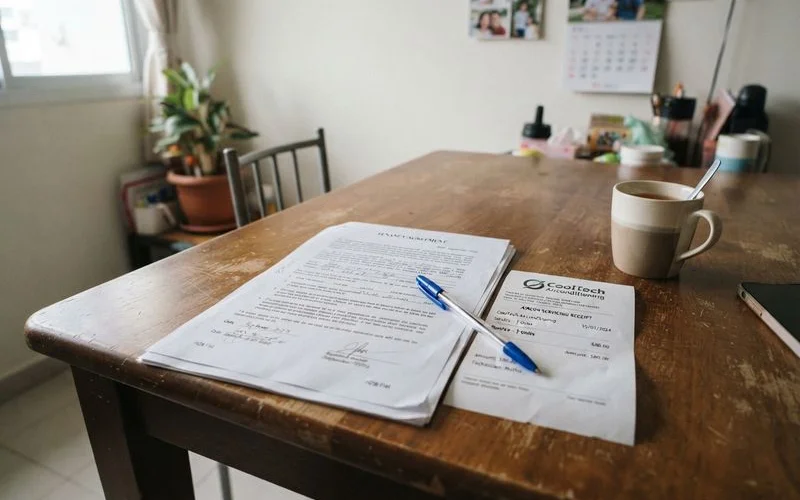
A landlord can reasonably argue that a breakdown was caused by missed servicing if there’s no record the tenant kept up their end. This is why keeping receipts, even informal ones, protects both sides: it’s evidence the unit was maintained on schedule, which matters if a warranty claim or a dispute over who pays for a repair comes up later.
What to check before you sign a lease
If you’re a tenant, read the aircon clause before signing, not after a unit breaks down. Look for the required servicing frequency, whether it names a specific contractor or leaves the choice open, and what happens if servicing is missed. If you’re a landlord, a clearly worded clause with a specific frequency requirement is one of the simplest ways to avoid a dispute down the line.
If a dispute does come up
Start with the tenancy agreement wording, then the servicing history if you have receipts. Most disagreements get resolved without going further once both sides look at what was actually agreed and whether it was followed. For anything beyond a straightforward reading of the lease, it’s worth getting advice specific to your situation rather than relying on general guidance like this.
A practical checklist for tenants
Before your first servicing visit, check three things in your lease: the required frequency, whether a specific contractor is named or the choice is left to you, and what documentation you’re expected to provide as proof. Book within the required window rather than waiting until the deadline, and always request a written receipt or invoice, even a simple one, that names the date and what was done. Keep these together, digitally or on paper, for the length of your tenancy.
A practical checklist for landlords
A clearly worded aircon clause protects both sides, not just the landlord. Specify the frequency in plain terms, state whether receipts need to be provided and how often, and be clear about what counts as tenant-caused damage versus normal wear. Being specific upfront, before a dispute ever comes up, tends to prevent far more disagreements than trying to interpret a vague clause after something has already gone wrong.
Why this is worth getting right from day one
Aircon issues are one of the most common sources of friction between tenants and landlords in Singapore precisely because responsibility can feel ambiguous without a clear agreement. Sorting out the servicing clause properly at the start of a tenancy, and both sides sticking to their part of it, avoids the vast majority of disputes before they start.
Knowing where the line usually sits, and keeping paper records on your side of it, is the simplest way to avoid an argument over a broken unit months into a lease. Our methodology page explains how we assess the contractors in our directory, and the homepage has our full category list if you need to find one for scheduled servicing.
FAQ
- Who normally pays for routine aircon servicing in a rental?
- In most Singapore tenancies, the tenant covers routine servicing during the lease, often required at a set frequency in the tenancy agreement, while the landlord covers major repairs and replacement of ageing units.
- What happens if the aircon breaks down and it's not from misuse?
- If a unit fails from normal wear rather than tenant neglect, the repair or replacement cost usually falls to the landlord. This is exactly the kind of split that should be spelled out in the tenancy agreement rather than assumed.
- Do I need to keep receipts for aircon servicing as a tenant?
- Yes. Keeping servicing receipts protects you if a dispute comes up later over whether the unit was maintained as required, and it's often a condition for any warranty claim on the unit.
- Can a landlord deduct servicing costs from my deposit if I didn't service the unit?
- This is possible if the tenancy agreement made servicing a tenant obligation and there's evidence it wasn't done. This is general information, not legal advice, check the specific terms of your lease or speak to a professional if a dispute arises.