Aircon repair and installation safety: what a professional does differently
By Sam Lee · Updated 2026-07-09
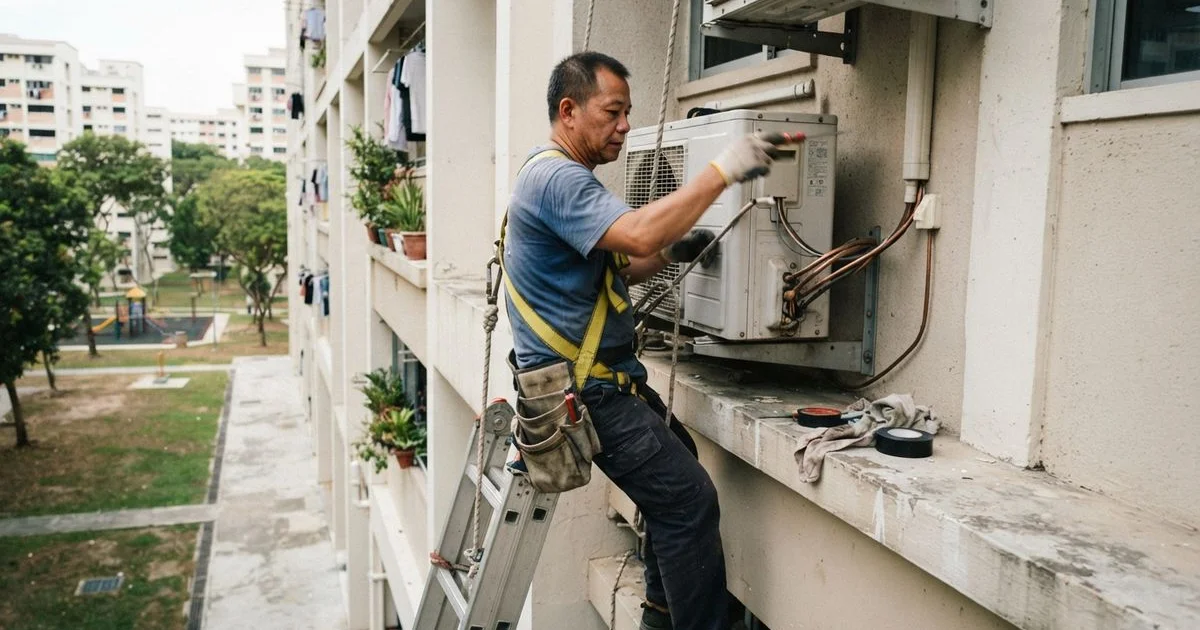
Safety in aircon work isn’t just about the technician, it’s also what stands between a properly finished job and a hazard left behind in your home. Here’s what a professional does differently.
Electrical safety comes first
Before opening any panel or working near wiring, a technician switches off power at the isolator switch near the outdoor unit, cutting all electrical supply to the components they’re about to work on. Skipping this step is one of the clearest signs of a rushed or careless job, and it’s a real risk to whoever is doing the work.
Handling refrigerant gas properly
Refrigerant gas requires specific equipment and licensed training to handle safely, recovering old gas, checking for leaks, and charging a system correctly all matter for both safety and effectiveness. This is exactly why gas trade licensing exists in Singapore, and why this part of the job should never be attempted without it.
| Safety step | Why it matters |
|---|---|
| Isolating power before internal work | Prevents electric shock |
| Proper refrigerant handling and recovery | Avoids health and environmental risk |
| Secure mounting of outdoor unit brackets | Prevents the unit falling or vibrating loose over time |
| Checking wiring is fully enclosed before finishing | Prevents exposed live wiring being left behind |
| Protecting floors and furniture during drilling | Prevents property damage during the job |
Secure mounting matters more than it looks
An outdoor unit that isn’t properly bracketed can vibrate loose over months or years, eventually risking a fall, especially on units mounted several storeys up. A technician who checks the wall or ledge can actually support the unit’s weight, and secures it to the right standard, is protecting against a problem that might not show up for a long time otherwise.
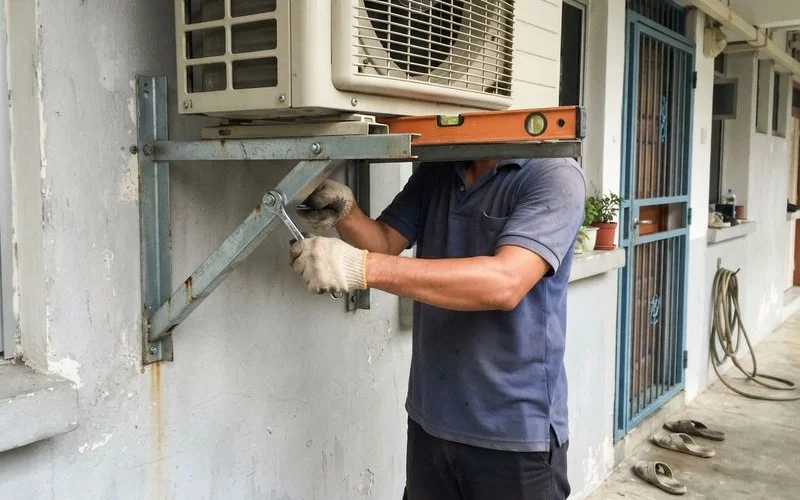
What a tidy, safe job looks like when it’s done
Before leaving, a careful technician confirms the isolator switch is functioning correctly for future servicing, that no wiring is left exposed, and that the area is cleaned of drilling dust and debris. They should also walk you through anything you need to know, where the isolator switch is, for instance, in case you ever need to cut power yourself in an emergency.
What you can reasonably ask about
It’s fair to ask a technician to confirm they’re licensed for gas handling if the job involves refrigerant, and to point out the isolator switch location before they leave. These aren’t unusual questions, a professional expects them and answers without hesitation.
Why rushing is where corners get cut
Most safety shortcuts happen because a job is being squeezed into less time than it actually needs, not because a technician doesn’t know better. A contractor booking too many jobs into a single day, or trying to finish before a strict deadline, is more likely to skip the isolator step, rush the vacuuming stage, or leave a bracket less secure than it should be. A realistic appointment window, without unnecessary time pressure, gives a technician room to do each step properly rather than cutting the ones that don’t show up until later.
Protecting your property, not just the technician
Safety during aircon work extends to protecting your home too. Drilling through walls or ceilings creates dust that can settle on furniture and flooring if it isn’t managed properly, a careful technician lays down protective sheeting before starting. If piping needs to run through a shared wall or ceiling void, they should also confirm they’re not compromising any existing wiring or plumbing in the process, rather than drilling blind.
Why this matters beyond the single job
A safely completed installation or repair protects you for years afterward, not just during the visit itself. Cutting corners on safety steps rarely shows up as a problem immediately, which is exactly why it’s worth confirming they were followed rather than assuming.
For contractors handling repair work safely, see our aircon repair hub, our methodology page, or the homepage for the full directory.
FAQ
- What's the biggest safety risk during aircon repair or installation?
- Electrical hazards and refrigerant handling are the two biggest risks. A technician isolates power before touching internal components, and refrigerant gas requires proper handling equipment and training to manage safely.
- Why does a technician switch off the isolator switch before working?
- The isolator switch cuts all power to the outdoor unit, protecting the technician from an electric shock while they're working on components that would otherwise stay live.
- Is refrigerant gas actually dangerous to be around?
- Refrigerant gas needs to be handled correctly, improper handling can pose health and environmental risks, which is exactly why it's a licensed activity in Singapore rather than something anyone can do without training.
- What should I expect a technician to do for my safety, not just theirs?
- Secure the work area, protect nearby flooring or furniture from dust and debris, and confirm the unit is safe to run, no exposed wiring, no loose mounting, before finishing the job.