Aircon repair in Singapore: DIY vs calling a professional, and how long it takes
By Sam Lee · Updated 2026-06-02
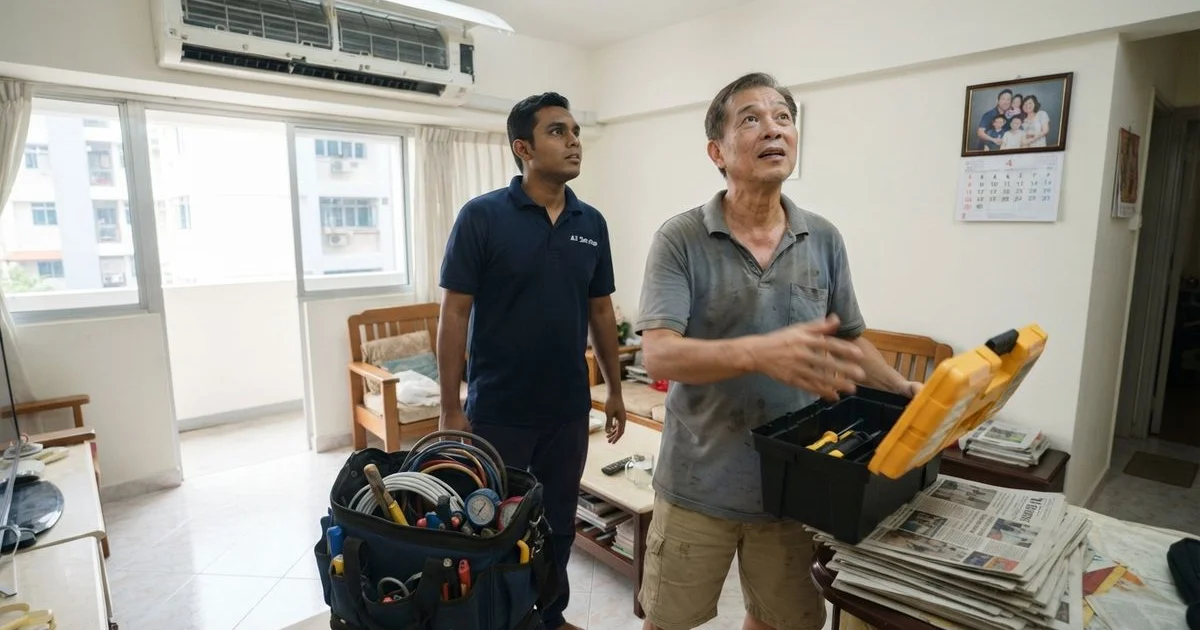
Not every aircon problem needs a technician, but more of them do than most people assume. Here’s a realistic split between what you can safely handle yourself and what genuinely needs a professional.
What’s actually safe to do yourself
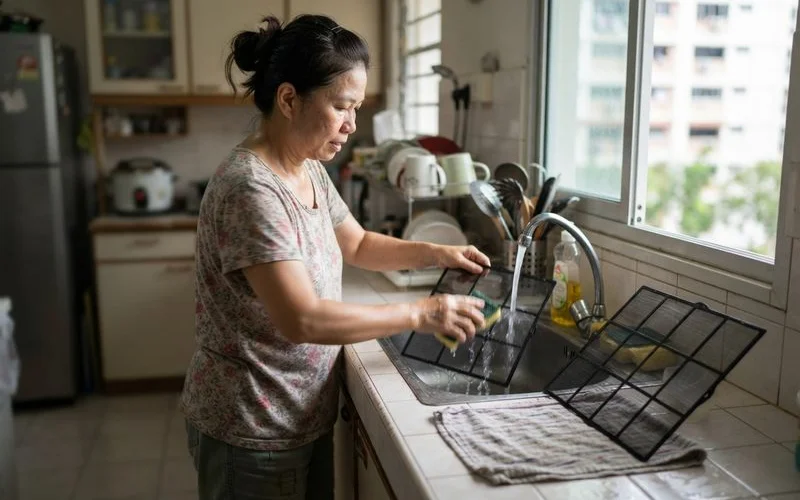
Cleaning the filter. Most indoor units have a filter that slides out for a rinse under running water. Doing this every few weeks, on top of professional servicing, keeps airflow strong and takes the load off the rest of the system.
Wiping the front panel and vents. Dust builds up fast in Singapore’s humidity. A damp cloth on the exterior panel and vents is harmless and worth doing regularly.
Checking the remote and settings. Before assuming there’s a fault, check the mode, temperature, and timer settings. It sounds obvious, but a surprising number of “broken aircon” callouts turn out to be a setting issue.
What genuinely needs a professional
| Symptom | DIY-safe? | Why |
|---|---|---|
| Dusty filter, weak airflow | Yes | Filter is designed for hand cleaning |
| Water dripping from indoor unit | No | Usually a drainage or coil issue needing diagnosis |
| Unit not cooling at all | No | Could be gas, compressor, or electrical, needs proper diagnosis |
| Strange noise from outdoor unit | No | Risk of moving parts, fan, or compressor issues |
| Unit trips the circuit breaker | No | Electrical fault, licensed technician only |
| Refrigerant gas top-up | No | Requires an NEA-licensed gas trade contractor |
The line is fairly clear: anything involving the outdoor unit, refrigerant, or electrical wiring is a licensed job, not a weekend project. Beyond the safety risk, an incorrect DIY attempt can turn a small repair into a much bigger one.
What a repair visit actually looks like
A technician starts by diagnosing the fault, checking the filter and drainage first since those are the most common and cheapest causes, before moving to electrical components or refrigerant levels. If the issue is a straightforward part, a capacitor or a sensor, it’s often fixed in the same visit. If a specific part needs to be ordered, expect a short wait and a follow-up appointment.
How long a repair takes
Simple fixes, cleaning a blocked drain or swapping a common part, typically take an hour or two once the technician is on site. More involved diagnostics, tracking down an intermittent fault or a slow refrigerant leak, can take longer and sometimes need more than one visit to confirm the fix has held.
When to just call someone
If you’ve checked the obvious things, filter, settings, breaker, and the unit still isn’t cooling properly, it’s time to book a technician rather than keep guessing. A slow leak or a failing part rarely fixes itself, and running a struggling unit for weeks can shorten its life and push up your power bill in the meantime.
What happens if a DIY attempt goes wrong
It’s worth understanding the actual risk before attempting anything beyond filter cleaning. Opening the outdoor unit without proper training risks contact with moving fan parts or exposed electrical components. Attempting to handle refrigerant without the right equipment can release gas improperly or damage the compressor, turning a top-up job into a much costlier repair or full replacement. And beyond the safety risk, a DIY attempt that goes wrong can also void whatever warranty remains on the unit, since most manufacturers require repairs to be carried out by a licensed technician for the warranty to hold.
A simple rule of thumb
If the task involves only what you can reach and clean by hand, the filter, the visible front panel, it’s fair game. If it involves opening the unit’s casing, touching anything electrical, or the outdoor unit at all, that’s the point to stop and call someone qualified. This single rule covers almost every situation homeowners run into, and it’s a far safer guide than trying to judge each problem individually without the training to diagnose it properly.
Knowing where the DIY line sits saves you from an unnecessary callout and, more importantly, from a repair attempt that makes things worse. You can browse contractors covering repair work on our aircon repair hub, check our scoring method for how we rank them, or return to the homepage for other categories.
FAQ
- Can I clean my aircon filter myself instead of paying for a service?
- Yes, the filter is designed to be removed and washed by hand, and doing this every few weeks between professional services is one of the easiest things you can do yourself.
- Is it safe to top up refrigerant gas myself?
- No. Handling refrigerant gas requires a license in Singapore, and doing it incorrectly can damage the compressor or create a safety hazard. This is always a job for a licensed technician.
- How long does a typical aircon repair take once a technician arrives?
- A straightforward fix, a capacitor or a minor part, can often be done in the same visit within an hour or two. A repair needing an ordered part may need a follow-up visit.
- What's the biggest mistake people make trying to fix their aircon themselves?
- Opening the outdoor unit or attempting anything involving refrigerant or electrical wiring. These carry real risk and are exactly the tasks a licensed contractor is trained and equipped to handle safely.