Health risks of a poorly maintained aircon: mould and indoor air quality
By Sam Lee · Updated 2026-06-23
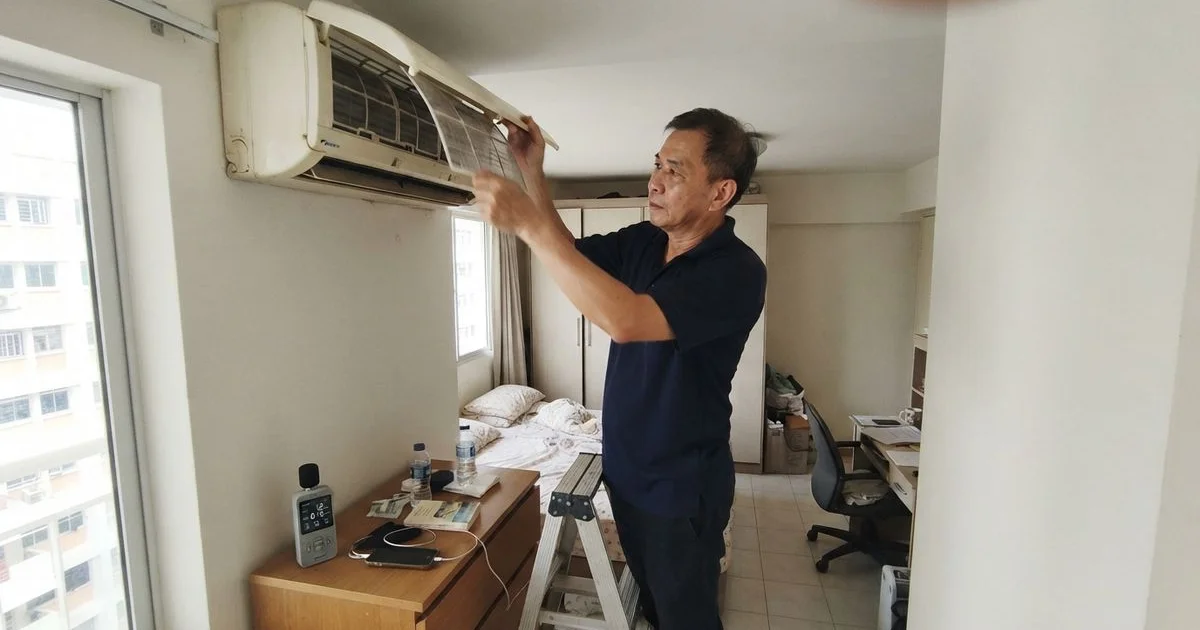
An aircon unit that’s rarely cleaned doesn’t just cool less effectively, it can become a source of the very air quality problems people install air conditioning to escape. This is general information, not medical advice.
How mould actually builds up in a unit
The evaporator coil inside the indoor unit stays damp during operation, which makes it a natural environment for mould and bacteria to grow if it isn’t cleaned regularly. Dust and moisture combine on the filter and coil surface, and every time the unit runs, air passes directly over that buildup before entering your room.
Singapore’s humidity makes this faster than in drier climates. A unit that goes six months or more without a proper clean in this environment is far more likely to develop a noticeable mould smell than the same unit serviced on schedule.
Signs worth paying attention to
| Sign | What it usually means |
|---|---|
| Musty smell when the unit starts | Mould or bacteria buildup on the coil |
| Visible dark spots on filter or vents | Active mould growth |
| Worsening allergy symptoms indoors | Possible air quality issue from the unit |
| Weaker airflow with normal cooling | Buildup restricting airflow, related but separate issue |
None of these are a certain diagnosis on their own, but two or more together are a reasonable trigger to book a chemical wash rather than wait for the next routine service.
What actually prevents it
Routine servicing, cleaning the filter and coil on a normal schedule, keeps buildup from reaching the point where it affects air quality. A chemical wash goes further, stripping the coil and other components down to bare metal periodically, which a routine service alone can’t fully achieve. Some units also carry a mould and bacteria resistant coating on the coil, which slows regrowth between services but doesn’t replace the need for cleaning altogether.
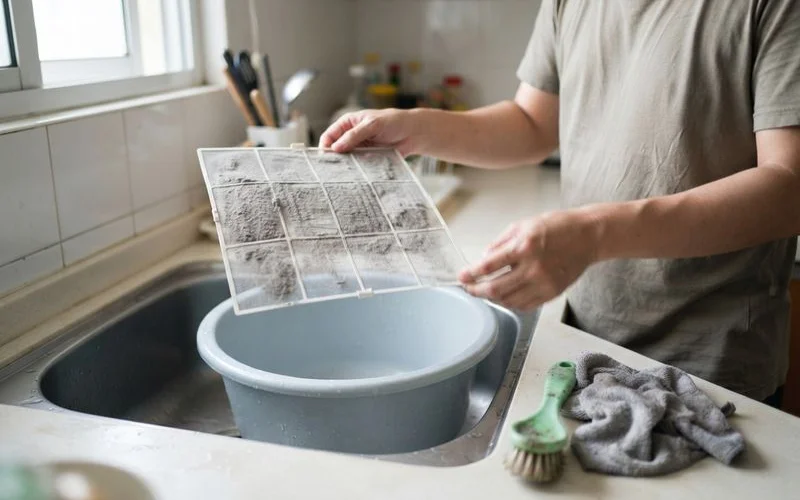
Between professional visits, washing the filter yourself every few weeks helps, since the filter is often where the buildup starts before it spreads further into the unit.
Who should be more cautious
Households with infants, elderly members, or anyone with asthma or other respiratory sensitivities have more reason to stay ahead of this rather than wait for visible symptoms. If anyone in your home has ongoing symptoms that seem to track with when the aircon is running, it’s worth raising with a doctor as well as booking a technician to check the unit itself.
Simple habits that help between services
Running the unit’s fan-only mode for a few minutes before switching off can help dry out the coil, reducing the damp environment mould needs to establish itself. Keeping the room reasonably ventilated when the aircon isn’t running, rather than sealing it constantly, also helps. Neither habit replaces professional servicing, but both make the gap between visits less likely to develop a problem.
Why some units are worse offenders than others
Units installed in naturally damp spots, near a bathroom, in a basement-level unit, or in a room with poor general ventilation, tend to develop buildup faster than units in drier, better-ventilated rooms, even on the same servicing schedule. If one unit in a multi-unit home consistently develops a smell faster than the others, that’s worth flagging to your technician specifically, since it may need a shorter interval between chemical washes than the rest of your units.
When it’s more than just the aircon
If a musty smell or air quality complaint persists even after a proper chemical wash, it’s worth considering whether the source is elsewhere, damp walls, poor ventilation in the building generally, or another source of moisture in the room. An aircon technician can usually tell you whether the unit itself is clear, which helps narrow down where else to look if symptoms continue.
The bottom line
A musty smell or visible buildup isn’t just an inconvenience, it’s a sign the unit needs attention before it affects the air you’re breathing at home. Regular servicing and the occasional chemical wash are the most effective ways to stay ahead of it.
For contractors who handle this kind of deep cleaning, see our aircon servicing and maintenance hub, check our methodology for how listings are scored, or browse the homepage for other categories.
FAQ
- Can a dirty aircon actually make indoor air worse than no aircon at all?
- A neglected unit can recirculate dust, mould spores, and bacteria that build up on the coil and filter, which can affect indoor air quality more than an aircon that's properly maintained, though this varies by household and unit condition.
- What are the signs my aircon has a mould problem?
- A musty smell when the unit starts, visible dark spots on the filter or vents, or worsening allergy symptoms when the unit is running are the most common signs worth having checked.
- Does a chemical wash remove mould from an aircon?
- A chemical wash strips built-up mould, dirt, and bacteria from the indoor unit's components far more thoroughly than a routine clean, which is why it's the usual fix once mould has taken hold.
- Is this something I should worry about for a household with young children?
- Indoor air quality is worth paying closer attention to in households with infants, young children, or anyone with respiratory sensitivities. This is general information, not medical advice, speak to a doctor if you have specific health concerns.