What aircon installation costs in Singapore and what drives the price
By Sam Lee · Updated 2026-05-25
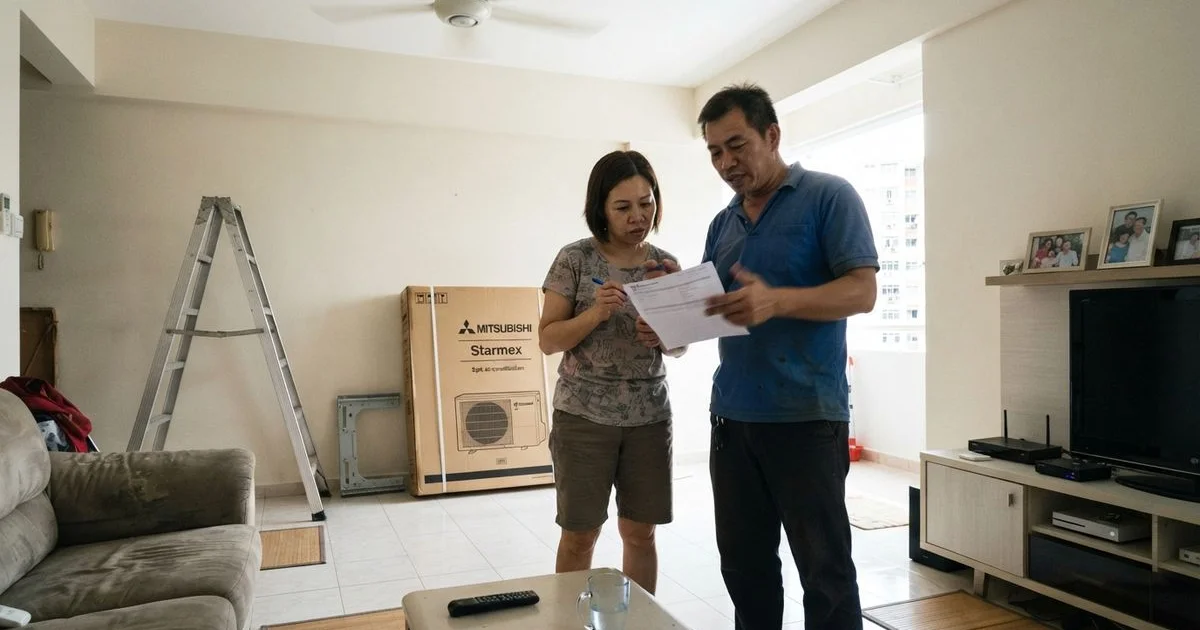
A new aircon installation is a bigger decision than a service call, and the price swings more too. Here’s what actually moves the number, so a quote makes sense before you sign off on it.
The three things that shape the price most
Number of indoor units. Each indoor unit adds cost, but the per-unit price usually drops as you add more to a single job, since one outdoor compressor and one site visit cover several rooms.
System type. A single split (one outdoor unit paired with one indoor unit) is the simplest and often the most expensive per room if you need several. A multi-split shares one outdoor unit across two or more indoor units and tends to bring the per-unit cost down. A larger “System 3” or “System 4” setup, common for bigger homes, brings it down further still, though the outdoor unit itself is bigger and more expensive.
Brand tier. Budget and local brands sit at the lower end. Mainstream brands sit in the middle. Premium, high-efficiency inverter units cost more upfront but usually use less power over years of daily running.
| System type | Typical cost pattern |
|---|---|
| Single split (1 outdoor, 1 indoor) | Highest cost per room if scaling to multiple rooms |
| Multi-split (1 outdoor, 2+ indoor) | Lower cost per unit than separate singles |
| System 3 / System 4 (large multi-split) | Lowest cost per unit at scale, larger outdoor unit |
| Budget or local brand | Lower upfront cost |
| Mainstream brand | Mid-range, common default choice |
| Premium inverter | Higher upfront cost, often lower running cost |
What a site visit actually changes
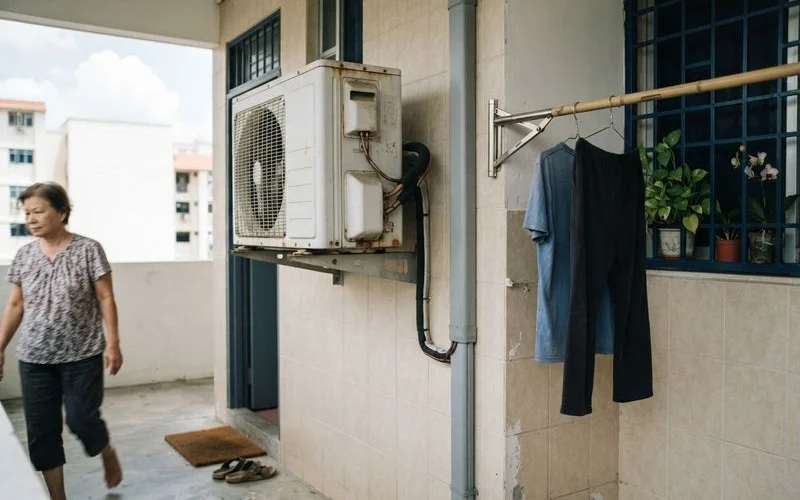
A quote given without a site visit is a rough estimate at best. Piping distance between the indoor and outdoor units, whether the outdoor unit needs a wall bracket or ledge space, and how easy it is to run trunking through your walls or ceiling all affect labour time. A contractor who insists on seeing the space before finalising a number is being realistic, not difficult.
Sizing matters more than most people expect
An undersized unit runs constantly and struggles to cool the room, while an oversized one cycles on and off too often and wastes energy without actually cooling more evenly. Room size, sun exposure, and how many people typically use the room all factor into the right capacity. A contractor should confirm the right sizing on-site rather than guessing from a phone call, this is a case where a slightly longer conversation upfront saves you from a costly mismatch later.
Reading the quote line by line
A complete installation quote should separate out the unit cost, the outdoor bracket or mounting, piping and trunking, electrical work such as an isolator switch, and labour. If a quote is a single lump figure with no breakdown, ask for one, it’s the easiest way to spot where the money is actually going and compare it fairly against another contractor’s number.
Hidden costs that catch people off guard
A few extra items tend to surprise first-time buyers. Long piping runs, where the outdoor unit sits far from the indoor unit, add both material and labour cost beyond a standard estimate. Disposal of an old unit, if you’re replacing rather than installing fresh, is sometimes billed separately. Wall or ceiling reinforcement, needed if the mounting surface isn’t strong enough on its own, is another line item that only shows up once a contractor has actually inspected the space. Ask about all three upfront so the final bill doesn’t surprise you.
Getting more than one quote
For any job involving more than one unit, it’s worth collecting at least two quotes, ideally both based on an actual site visit rather than a phone description. Piping distance and access are easy to underestimate without seeing the space, and the gap between a phone estimate and the real cost can be significant once a technician sees the walls involved. A second quote also gives you a sense of whether a price is reasonable for your specific layout, rather than comparing against a generic number.
Balancing upfront cost against running cost
It’s tempting to focus entirely on the installation price, but a cheaper budget unit can cost more over several years of daily running than a pricier inverter model, particularly for a household running units for long hours each day. If you’re planning to keep the system for the long haul, it’s worth weighing the higher upfront cost of a more efficient unit against what you’d save on power bills over its working life, rather than judging the purchase on installation cost alone.
Installation is a job you’ll live with for years, so it’s worth taking the time to get the sizing and system type right before cost becomes the only factor in the decision. Our aircon installation hub lists contractors covering this work locally, and our scoring method explains how we weigh their track record. You can also start from the homepage to browse other categories.
FAQ
- Does a multi-split system cost less than installing several single-split units?
- Usually, yes, on a per-unit basis. A multi-split system shares one outdoor compressor across several indoor units, so you save on outdoor unit and piping costs compared to installing separate single systems.
- Why do two quotes for the same job come out so different?
- Piping length, wall or ceiling access, brand tier, and how many indoor units are involved all move the price. A quote based on a phone description is rougher than one based on an actual site visit.
- Does a premium inverter brand really cost more to install?
- Yes, premium and high-efficiency inverter units generally carry a higher price than budget or mainstream brands, though they can cost less to run over time.
- Should I get more than one quote before booking installation?
- It's worth it for any job involving more than one unit. Piping and access issues are easy to miss over the phone, and a second quote gives you something to compare the first one against.