Aircon contractor licensing in Singapore: what it means when you're hiring
By Sam Lee · Updated 2026-06-26
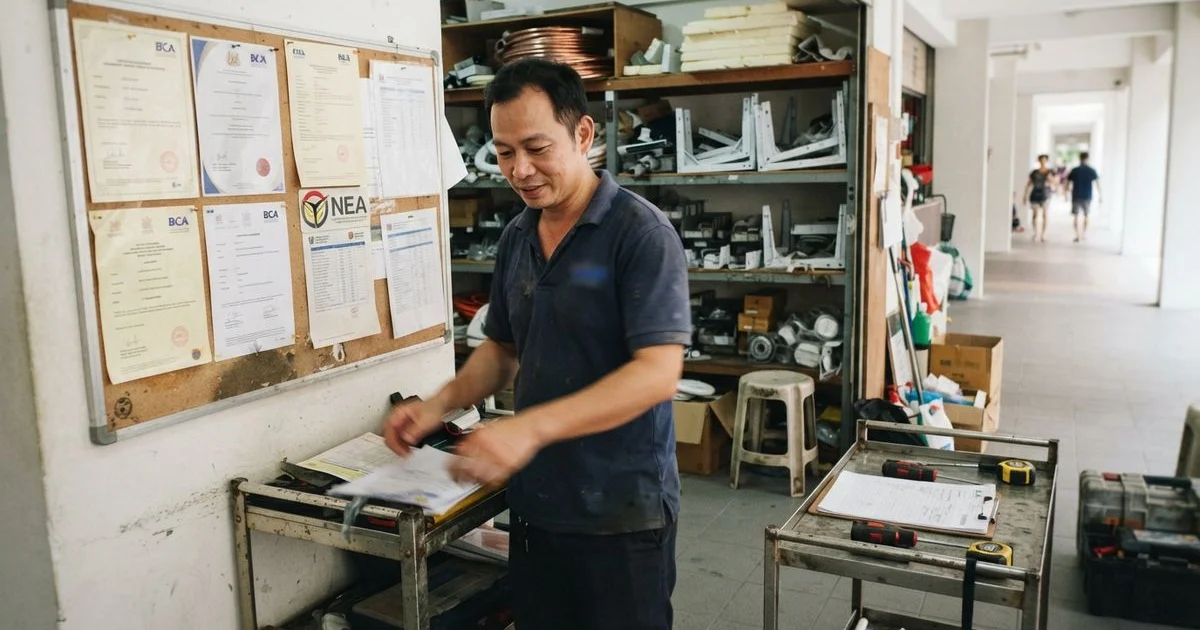
Aircon work in Singapore touches building codes and gas handling regulation, which is why licensing isn’t just paperwork, it’s a real signal of whether a contractor is equipped to do the job safely and correctly. This is general information, not legal advice.
What licensing actually covers
Installation work involving structural elements, mounting an outdoor unit securely, running trunking through walls, connecting to electrical supply, generally needs to meet building and safety standards. Separately, any work involving refrigerant gas, top-ups, leak repairs, decommissioning an old unit, requires specific gas trade licensing under Singapore’s environmental regulations, because refrigerant handling carries its own safety and environmental rules.
A contractor operating without either of these isn’t necessarily doing bad work, but they’re operating outside the framework designed to catch problems before they become safety issues, and that gap becomes your problem if something goes wrong.
| What licensing covers | Why it matters to you |
|---|---|
| Building and installation standards | Structural safety of mounted units, correct wiring |
| Gas trade licensing | Safe, legal handling of refrigerant gas |
| Manufacturer authorisation | Often required for warranty validity |
Why this affects your warranty, not just safety
Many aircon manufacturers specify that installation must be carried out by a licensed or authorised installer for the product warranty to remain valid. If something fails within the warranty period and the installation wasn’t properly licensed, you may find the manufacturer declines the claim, turning what should have been a free repair into an out-of-pocket cost.
What to check before you book
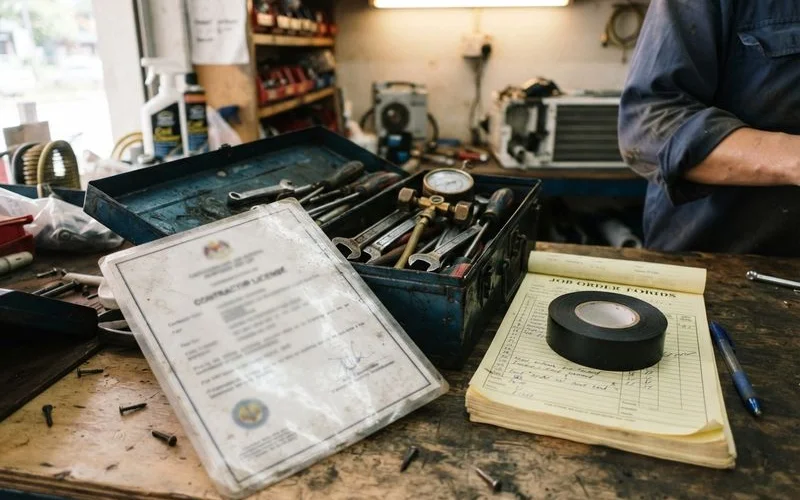
Ask directly whether the contractor and technician are licensed for the work involved, particularly anything touching refrigerant gas. A legitimate operator answers this without hesitation and can usually provide documentation if asked. It’s also reasonable to ask how long they’ve operated and whether they’re familiar with your specific unit brand, especially for less common or commercial-grade systems.
Red flags worth noticing
A quote significantly below every other one you’ve collected, reluctance to answer licensing questions directly, or a push to pay entirely in cash with no formal invoice are all reasons to slow down and ask more questions before booking. None of these prove a problem on their own, but together they’re worth taking seriously.
What happens if something goes wrong with unlicensed work
If an unlicensed installation causes damage, an electrical fault, a structural issue, or a refrigerant leak, you may find you have far less recourse than you’d expect. There’s often no formal body to escalate a complaint to in the way there is with a properly licensed and registered contractor, and any insurance claim related to the damage can also become more complicated if the work wasn’t compliant to begin with. This is one of the clearest practical reasons licensing matters beyond the paperwork itself.
What licensing doesn’t guarantee
Licensing is a baseline, not a full guarantee of quality. A licensed contractor can still do a rushed job, and an unlicensed handyman can still be genuinely skilled at basic tasks. What licensing does guarantee is that the contractor has met a recognised standard for the parts of the job that carry real safety and regulatory weight, refrigerant handling and building compliance in particular. Pair the licensing check with the usual signals, reviews, clear communication, a proper written quote, rather than treating it as the only thing that matters.
A quick way to frame the conversation
If asking about licensing feels awkward, frame it simply: “which of you will be handling the gas work, and are they licensed for it?” This is a normal, specific question that any established contractor answers easily, and it tends to prompt a more detailed, reassuring response than a vague “are you licensed” that can be answered with a quick yes regardless of the truth.
Why it’s worth the extra question
Licensing questions take thirty seconds to ask and can save you from a voided warranty, a safety issue, or having no real recourse if the work turns out to be faulty. It’s one of the simplest checks you can do before any money changes hands.
For contractors we track in this area, see our full directory, and check our scoring method for how listings are assessed and what we look for when it comes to licensing and track record.
FAQ
- Why does it matter if my aircon contractor is licensed?
- Licensing generally reflects that a contractor meets recognised building and safety standards, and gas handling licensing specifically covers safe use of refrigerant. Hiring an unlicensed operator can affect warranty validity and puts safety compliance in question.
- How do I check if a contractor is properly licensed?
- Ask directly and expect a straightforward answer, a legitimate contractor is used to the question. You can also ask to see documentation, particularly for any job involving refrigerant gas handling.
- Does an unlicensed installer void my aircon's manufacturer warranty?
- This is common. Many manufacturers require installation by a recognised or licensed installer for the warranty to remain valid, so an unlicensed install can leave you without warranty cover if something goes wrong later.
- Is a cheaper unlicensed quote ever worth the risk?
- This is general information, not legal advice, but a lower price from an unlicensed operator often comes with real tradeoffs, voided warranty, no recourse if the work is faulty, and potential safety issues that a licensed contractor is trained to avoid.